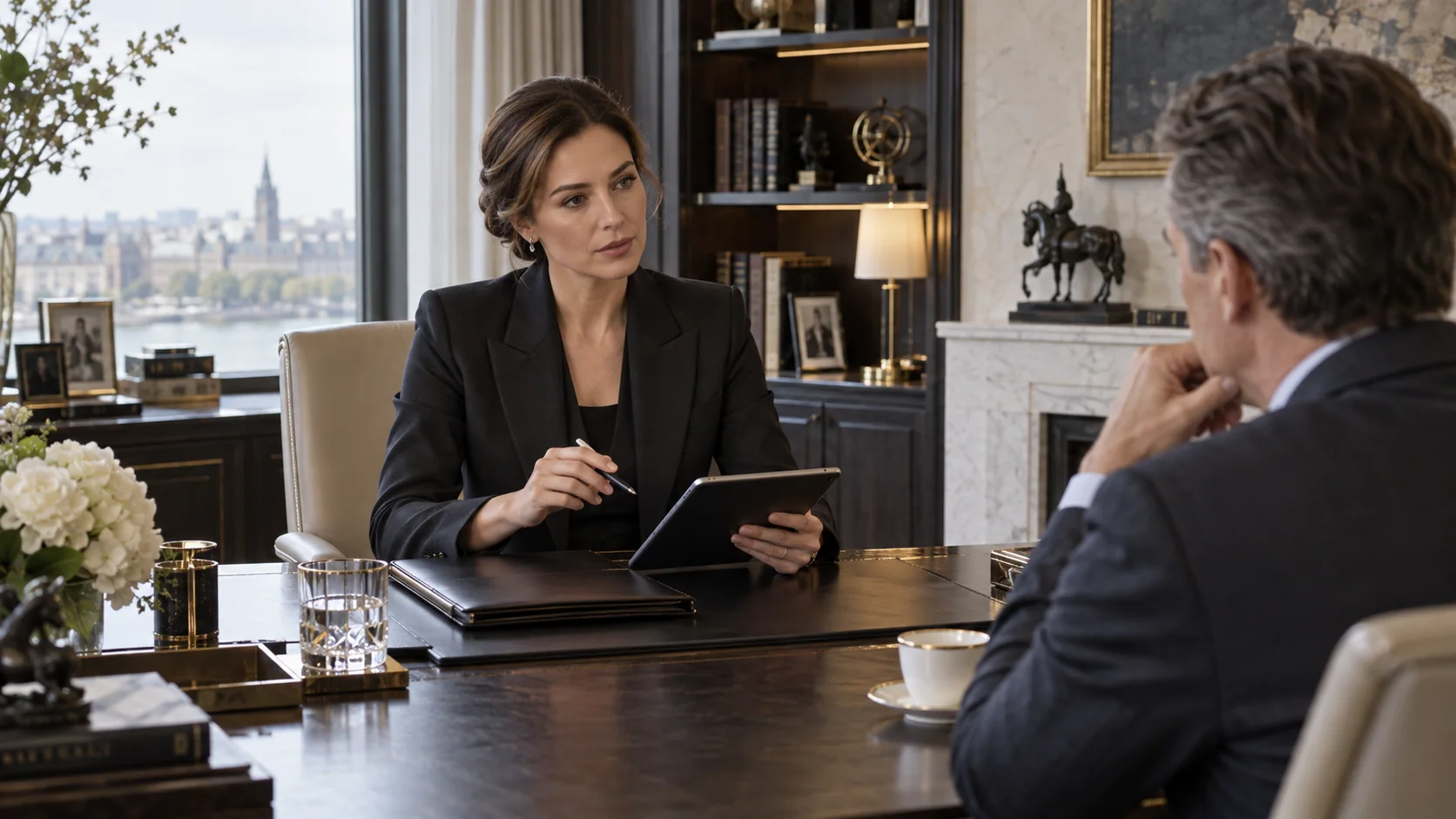
For a UHNW principal, the choice between a private personal assistant and an executive assistant is not simply a matter of title. Both protect time, manage information and anticipate needs, but they usually operate in different parts of the principal’s world.
A private PA tends to create continuity across personal life, family, residences and travel. An executive assistant usually protects professional workflow, business priorities and access to the principal. When the distinction is unclear, one person can become responsible for everything without having the capacity or authority to do any part exceptionally well.
Private personal assistant vs executive assistant: the simplest distinction
A private personal assistant manages the principal’s personal logistics and lifestyle administration. An executive assistant manages the professional rhythm around the principal’s executive responsibilities.
The boundaries are not absolute. A private PA may handle limited business administration, while an EA in a family office may support personal matters that affect the professional diary. The right brief should define which sphere takes priority, where the role is based and who resolves conflicts between personal and business commitments.
What does a private personal assistant do?
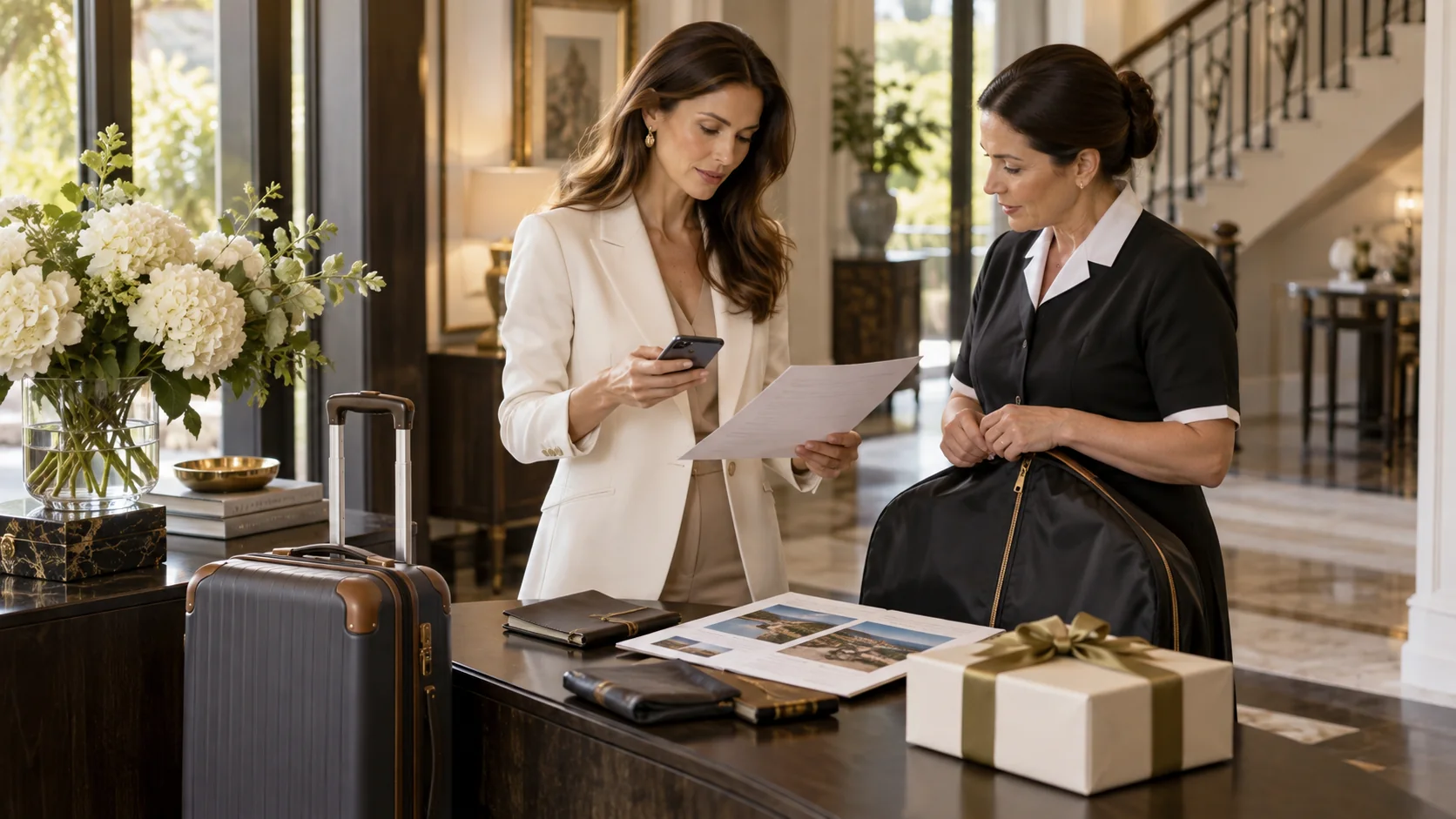
A private PA removes friction from the principal’s daily life. The role is highly personal, detail-heavy and often connected to family members, household staff, residences and trusted external providers. Responsibilities may include:
- maintaining personal, family and social calendars;
- coordinating commercial and private travel, visas, itineraries and packing information;
- managing medical, wellness, education and family appointments;
- organising reservations, gifting, memberships and private events;
- liaising with household managers, chauffeurs, security and residence teams;
- tracking personal correspondence, renewals and confidential records;
- supporting moves between residences and seasonal travel;
- handling purchases, returns and lifestyle requests with discretion.
The strongest private PAs understand preferences without becoming informal or intrusive. They know when to act independently, when to present options and when a request should be passed to a specialist or private house manager.
What does an executive assistant do?
An executive assistant protects the principal’s professional capacity. The role sits closer to the business, private office or family office and manages a high volume of decisions, stakeholders and time-sensitive information. Typical responsibilities include:
- controlling a complex executive diary and meeting priorities;
- screening access, correspondence and meeting requests;
- preparing agendas, briefing materials and follow-up actions;
- coordinating boards, advisers, senior executives and family-office teams;
- planning business travel and aligning it with professional commitments;
- maintaining document, approval and signature workflows;
- tracking deadlines, decisions and delegated actions;
- protecting confidential commercial and investment information.
A capable EA does more than keep a calendar tidy. They understand which commitments create value, identify conflicts before they reach the principal and ensure that the right information is available at the right moment.
Private PA and executive assistant compared
| Area | Private personal assistant | Executive assistant |
|---|---|---|
| Primary focus | Personal and family continuity | Professional and executive workflow |
| Typical base | Residence, private office or travelling with the principal | Business office, family office or private office |
| Calendar | Personal, family, social and lifestyle commitments | Business meetings, boards and professional priorities |
| Key relationships | Family, household staff, medical and lifestyle providers | Executives, advisers, investors and professional stakeholders |
| Travel | End-to-end personal and family logistics | Business itinerary and meeting coordination |
| Core strength | Personal knowledge, resourcefulness and discretion | Prioritisation, gatekeeping and information control |
| Success measure | Personal life runs smoothly across locations | Principal’s professional time is used effectively |
Why UHNW support roles often overlap
A UHNW principal’s personal and professional worlds rarely stay in separate calendars. A board meeting may affect a family flight. A residence opening may need to align with an investor event. Security, aviation, household and executive teams may all require the same decision within a short period.
Some overlap is therefore practical. The risk comes when every request is routed to one assistant without a clear order of priority. The job gradually expands from diary support into household operations, project management, family logistics and strategic coordination. That creates a role with the title of PA or EA but the workload of several positions.
Three support models that can work
1. One hybrid PA/EA
A hybrid role can succeed when one sphere clearly dominates, the overall workload is manageable and the principal prefers a single point of contact. The brief should state the approximate personal-to-business split, normal working pattern, travel expectations and which tasks fall outside the role.
This model is less suitable when the principal leads several businesses, travels extensively and has a complex family or property structure. Confidentiality alone is not a reason to give one employee an unsustainable volume of work; carefully designed access controls can support a small, trusted team.
2. A private PA and an executive assistant
Separate roles provide clear ownership. The EA manages business priorities and professional access, while the PA coordinates personal life, family and residences. The assistants need a disciplined handover process because travel and diary decisions often affect both spheres.
A shared master calendar can show availability without exposing every confidential detail. Each assistant should know who can confirm, move or decline commitments and how competing priorities are escalated.
3. PA and EA support led by a chief of staff
Where the principal has several companies, advisers, residences and major projects, a private chief of staff may coordinate outcomes across the wider structure. The PA and EA continue to own execution in their respective areas; the chief of staff resolves priorities, holds senior stakeholders accountable and keeps strategic work moving.
Which role does your principal need?
Start with the pressure points rather than a preferred title.
- Choose a private PA when travel, family logistics, residences, appointments and lifestyle administration lack one reliable owner.
- Choose an executive assistant when the professional diary, stakeholder access, meetings and decision flow are consuming the principal’s attention.
- Consider both when personal and business demands are independently complex or active at the same time.
- Consider a chief of staff when the real need is authority across teams, advisers and projects rather than more administrative capacity.
Questions to answer before recruitment
- Where does the unresolved work originate? Separate household and family requests from executive and business requests.
- Which calendar is most complex? Identify whether personal or professional scheduling drives the workload.
- Who needs access to the assistant? List family members, staff, advisers and executives who will make requests.
- What authority can be delegated? Define spending, scheduling and communication limits.
- How much travel is expected? Clarify whether the assistant travels, supports remotely or coordinates local teams.
- What hours are genuinely required? Build proper cover for different time zones rather than assuming constant availability.
- Which information should remain separated? Establish confidentiality and data-access boundaries before the role begins.
Authority, access and information security
Both roles may handle passports, schedules, contact networks, financial information and details about family movements. Trust is essential, but trust should be supported by sensible systems. Use role-based access, approved devices, secure password management and clear procedures for sensitive documents.
The assistant also needs an explicit mandate. An EA cannot gatekeep effectively if every stakeholder can bypass the diary process. A PA cannot coordinate residences if suppliers and household staff do not understand their authority. Delegation should be documented and communicated without giving broader access than the work requires.
London and Monaco appointments
Location affects networks, working patterns and travel. A principal whose business base is in the UK may need an executive assistant in London close to the private office, alongside a private personal assistant in Monaco coordinating residences and personal arrangements.
Another principal may need the reverse: a Monaco-based executive assistant supporting the family office and a private PA in London managing family and lifestyle commitments. The structure should follow where decisions and activity occur, not simply the principal’s official residence.
What to assess in candidates
For either role, discretion and organisation are baseline requirements. The more useful assessment is how a candidate exercises judgment. Ask for examples of conflicting priorities, last-minute travel disruption, confidential requests and situations where they had to challenge an assumption respectfully.
A private PA should demonstrate resourcefulness, emotional intelligence and confident coordination with household teams. An EA should show executive-level written communication, commercial awareness and disciplined control of time and information. Reference checks should confirm the candidate’s actual scope, authority and working relationship with previous principals.
Common hiring mistakes
- Using PA and EA interchangeably without defining the principal’s priorities.
- Adding household management, childcare or strategic projects after the search has begun.
- Hiring for technical diary skills while overlooking judgment and discretion.
- Expecting one assistant to cover several time zones without relief.
- Failing to explain the reporting line between the principal, family office and household.
- Assuming a strong corporate EA will automatically enjoy highly personal private work.
Frequently asked questions
Can one person be both a private PA and an EA?
Yes, where the combined workload is realistic and one area has clear priority. A written scope, defined authority and regular review help prevent the role from expanding beyond one person’s capacity.
Is an executive assistant more senior than a personal assistant?
Not automatically. Seniority depends on scope, complexity, authority and experience. A private PA to a UHNW principal may hold exceptional responsibility and discretion, even though the work remains centred on the private sphere.
When is a chief of staff more appropriate?
A chief of staff is appropriate when the principal needs someone to drive outcomes across teams, advisers and strategic workstreams. The role should not be used merely as a more impressive title for diary and lifestyle administration.
How should a confidential search begin?
Map the unresolved work, stakeholders, locations, schedule and authority first. Elite Butlers Global can then advise whether to hire a private personal assistant, hire an executive assistant, or create a carefully divided support structure.
Choose clarity before choosing a title
The right assistant gives the principal more than time. They create order, protect attention and make sure personal or professional commitments are carried through reliably. Defining which world the role must own is the first step toward a lasting appointment.
Contact Elite Butlers Global for a confidential discussion about PA, EA or private-office support for a UHNW principal.