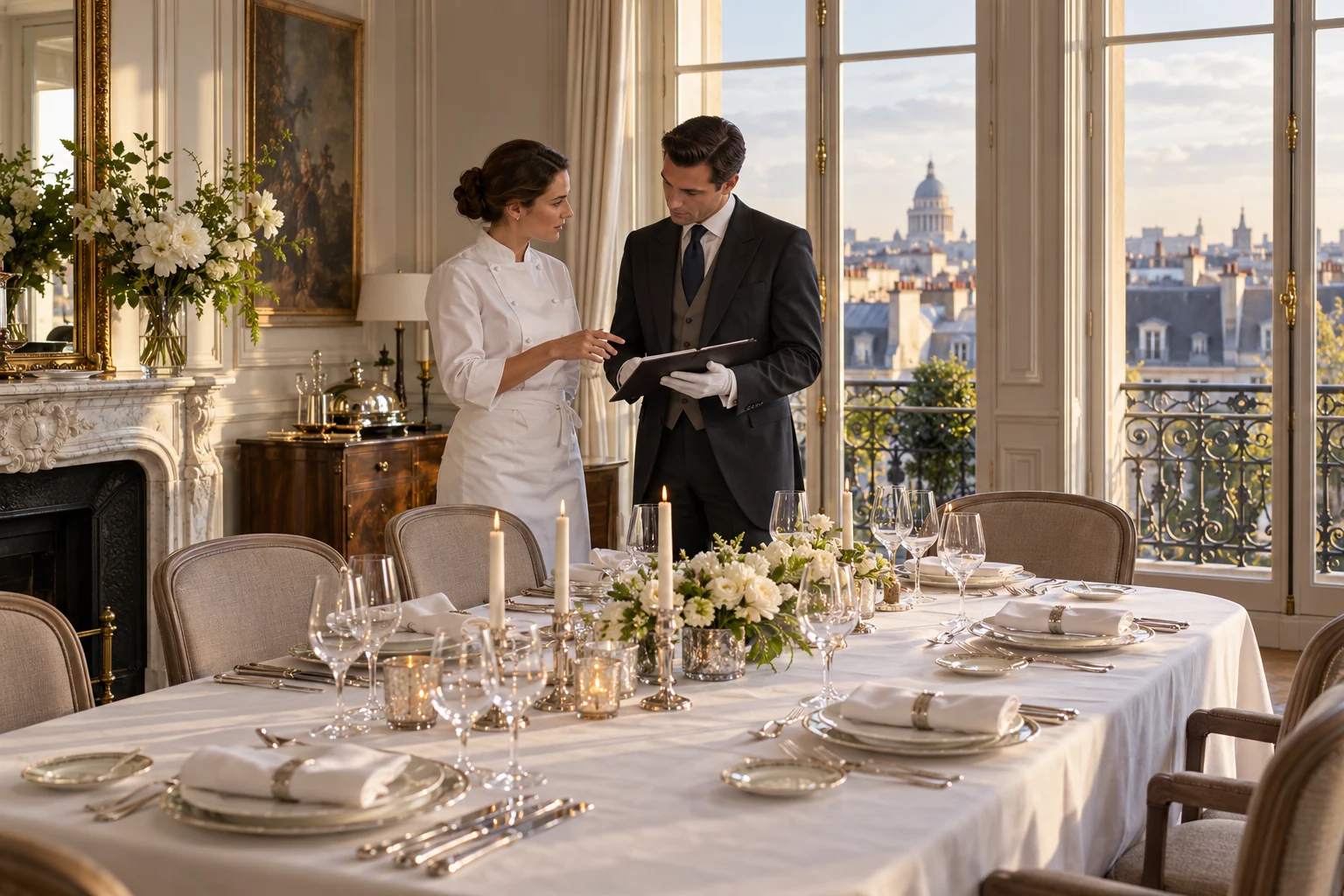
A private dinner in Paris should give the host time with their guests, not a second job directing the kitchen. Yet even a small evening can become complicated when nobody has agreed who welcomes arrivals, pours drinks, clears plates or tells the chef that a guest is running late.
The solution is not necessarily a larger team. It is a shared plan that connects the menu, the residence and the people delivering the evening. This guide explains how to coordinate a private chef, butler and service team for a dinner at home in Paris, from the first brief to the final kitchen handover.
Define the evening before choosing the menu
Begin with the kind of gathering you want to host. A relaxed supper with friends needs a different rhythm from a formal seated dinner or an evening that starts with drinks in one room and moves to another for several courses.
Give the team a concise brief: the date, expected guest count, arrival window, preferred meal time and any firm finish time. Explain whether the host wants dishes introduced, wine discussed or service kept as unobtrusive as possible. If guests use different languages, identify the communication needs before assigning guest-facing roles.
Be clear about what matters most. A leisurely conversation-led evening may call for fewer interruptions and more flexible pacing. A dinner before another engagement needs a menu and service plan that can meet a defined schedule. Neither is inherently more refined; the right choice is the one that suits your guests.
Give the chef and butler distinct responsibilities
The chef leads the food
A private chef in Paris can develop the menu around your preferences and the kitchen available. Agree who handles ingredients, preparation, equipment requirements and kitchen clean-down. For an occasional dinner rather than a continuing household appointment, discuss whether an event chef is the more suitable brief.
Ask the chef to explain how the menu will be delivered in this particular home. A dish that needs extensive last-minute attention may be perfectly achievable, but it should be considered alongside the other courses, available work surfaces and service support.
The butler coordinates the guest experience
A butler in Paris can coordinate table presentation, welcoming guests, drinks and communication between the dining room and kitchen, depending on the agreed role. This creates a useful point of contact for the host and helps prevent several people giving the chef conflicting instructions.
Additional service staff may be needed for simultaneous tasks: receiving arrivals while drinks are served, carrying courses, clearing and washing up. Decide this from the workload and layout rather than assuming one person can cover every part of the evening.
Check the apartment before confirming the service plan
In a Paris residence, the route between the entrance, kitchen and dining table can matter as much as the number of guests. A narrow passage, separate kitchen or limited counter space can affect how plates move and where used glasses wait to be cleared.
Arrange a practical review, in person where possible, before finalising a complex menu. Confirm delivery access and any building arrangements with the relevant contact. Do not assume that suppliers can arrive at the front door, use a lift or leave equipment in shared areas without prior coordination.
- Kitchen capacity: check ovens, refrigeration, preparation space and the equipment the chef needs.
- Tableware: count matching plates, cutlery, glasses and serving pieces for the agreed courses.
- Service route: identify where finished plates leave the kitchen and where used items return.
- Drinks station: allocate space for water, glasses and drinks preparation without blocking food service.
- Storage and collections: agree where deliveries, hired items and packaging can be placed.
If something is missing, decide whether to simplify the plan or arrange additional equipment. Discovering a shortage before the evening is much easier to manage than improvising while guests are seated.
Use one guest brief and one current seating plan
Keep the guest information the team needs in a single current version. Confirm the final number, seating preferences and any dietary requirements with the chef before the menu is settled. Distinguish preferences from allergies and have the chef confirm what can be accommodated; service staff should never guess ingredients or promise that a dish is suitable without checking.
Link any agreed alternative dish to the correct guest and place setting. If seats change, the service lead must tell the kitchen. A discreet, accurate handover is more useful than repeatedly asking the guest the same questions at the table.
Share only information relevant to delivering the dinner. Guest contact details, personal matters and photographs of the evening should not circulate among suppliers without a clear purpose and permission.
Create a short running order
A running order is the sequence the team works from, not a rigid timetable imposed on the conversation. Include preparation, arrival drinks, seating, courses, coffee and the agreed end of service. Assign responsibility for each transition.
For example, for a dinner with arrivals around 19:30, the host might agree that the service lead will check readiness with the chef before inviting guests to sit. The chef then receives confirmation that everyone is seated before finishing the first course. These are illustrative timings and signals, not a fixed formula for every dinner.
- Before guests arrive: complete the table, check the menu and brief every team member.
- During arrivals: separate the welcome and drinks responsibilities from kitchen preparation.
- Before seating: confirm guest numbers, any late arrivals and readiness in the kitchen.
- Between courses: use the service lead to communicate pace and any changes.
- After dinner: move to coffee or drinks as planned and begin quiet clearing where appropriate.
Agree how the team will handle a late guest or a longer conversation. The host should know which dishes allow flexibility and when a change would compromise the planned service. One clear decision is better than several hurried messages.

Plan drinks alongside the food
Drinks service should have its own brief. Confirm what will be offered on arrival, at the table and afterwards, including thoughtful non-alcoholic options. Decide who buys the drinks, checks quantities and prepares the glassware.
If wine is a central part of the evening, a sommelier in Paris may help with selection and service. That does not mean every dinner needs a separate specialist. The question is whether the requested experience can be delivered comfortably by the team already planned.
Keep the table practical. Tall arrangements, crowded place settings and too many glasses can make conversation and service awkward. Let the menu and drinks plan determine what is needed rather than filling every available space.
Confirm costs, hours and the end-of-evening handover
Request a clear breakdown of staff time, ingredients, drinks, equipment hire, deliveries and any other agreed charges. Include preparation and clean-down when discussing working hours. A dinner that finishes late can still require substantial work after the guests leave.
Clarify how changes in guest numbers, additional courses or a later finish will be handled. Ask who approves extra spending and who communicates changes to the whole team. For a more involved occasion with several suppliers, an event planner may be useful, but avoid adding a coordination role without defining its responsibility.
Finally, agree what the home will look like at handover: kitchen and dining area reset, hired items counted, waste handled through the residence’s arrangements and any remaining food discussed with the chef. Record breakages or missing items promptly rather than leaving questions for the next morning.
A final checklist for the host
- The guest count, dietary brief and seating plan are confirmed.
- The chef has reviewed the kitchen and approved the menu for the space.
- Welcome, drinks, table service and washing-up duties have named owners.
- One service lead communicates between the host and kitchen.
- Deliveries, hired equipment and building access are coordinated.
- The running order includes preparation and the final handover.
- Costs, working hours and the process for changes are agreed.
Frequently asked questions
Do I need both a private chef and a butler for a dinner in Paris?
Not necessarily. A simple supper may need less support than a formal multi-course dinner. Separate the cooking and guest-service tasks, then choose a team that can cover them without asking one person to be in two places at once.
How many service staff should I book?
There is no reliable headcount based on guest numbers alone. Courses, drinks service, room layout, preparation time and clearing duties all affect the workload. Ask for a staffing proposal built around your dinner rather than a universal ratio.
Can a private dinner work in a small Paris kitchen?
It can, if the chef confirms that the menu and preparation plan suit the equipment and space. A simpler menu or a different service format may be a better choice than trying to reproduce a restaurant operation at home.
How far ahead should I arrange the team?
Begin once the date, approximate guest count and format are known. Allow time to review the residence, agree the menu and confirm availability. Specific lead times depend on the brief and the people required.
Build the dinner around your guests
The best starting point is a clear picture of the evening you want, followed by a practical division of responsibilities. Explore private household services in Paris or contact Elite Butlers Global with your date, guest count, residence details and preferred dining style to discuss the support required.